How to choose between reverse osmosis and nanofiltration?
In the field of industrial water treatment, the choice of filtration technology is essential to meet quality, safety and performance requirements.
Two membrane processes in particular stand out: reverse osmosis and nanofiltration. For manufacturers in all sectors, knowing how to distinguish between these technologies is the key to making the most appropriate choice. Ovive explains how to choose!
Reverse osmosis and nanofiltration: two similar but distinct technologies
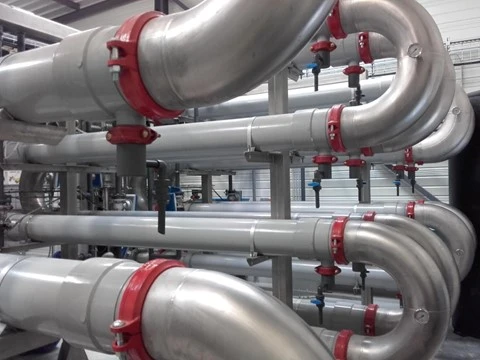
Reverse osmosis is based on a simple physical principle: apply a pressure greater than the natural osmotic pressure to force the water through the filtration membrane. This membrane, with its extremely fine pores (around 0.0001 µm), retains virtually all dissolved salts, viruses and bacteria, heavy metals and organic compounds. It is therefore ideal for applications requiring high-purity water, such as in the pharmaceutical and food industries.
Nanofiltration, on the other hand, uses a larger membrane (0.001 to 0.01 µm) that allows certain minerals and organic compounds to pass through. This is a particularly effective technique for removing pesticides, dissolved organic matter and low-molecular-weight compounds, while preserving some useful mineral salts.
Nanofiltration is less energy-intensive than reverse osmosis, thanks to its less dense membrane. But reverse osmosis offers superior retention efficiency.
What criteria should you take into account when choosing the right system?
The choice between reverse osmosis and nanofiltration is not an arbitrary one: it’s based on a precise analysis of treatment requirements, the nature of the effluent to be treated, water quality objectives and economic and energy constraints.
Expected water quality
If the objective is to have very pure water (free of salts, micro-organisms, etc.), as is often the case in the pharmaceutical sector,reverse osmosis is essential.
The composition of the water to be treated
Water containing mainly organic compounds, pesticides or low molecular weight substances can be effectively treated by nanofiltration.
Operating costs
Energy consumption and maintenance requirements, such as replacement of filtration membranes, must also be taken into account. Nanofiltration is generally more economical in this respect.
The challenge of reuse
For industrial companies aiming to reuse wastewater (or REUT),reverse osmosis provides water that’s close to drinking water. It’s the ideal solution for looping!
It is also essential toconsider nanofiltration and reverse osmosis as components of a broader treatment chain. In some cases, they can be combined with or integrated into a pre-treatment system.
Choose Ovive for a system tailored to your needs
There is no one-size-fits-all solution: each industrial project requires a precise technical study. Ovive, an expert in water treatment for over 25 years, offers comprehensive support, from effluent audits to the installation and maintenance of customized membrane filtration systems.
Our various agencies throughout France support a wide range of industrial sectors, and our integrated design office enables us to provide complete facility management. We also offer a secure, tailor-made turnkey solution with our Water as a Service service.
Would you like more information about our services? Would you like us to help you treat your industrial water? Talk to us!