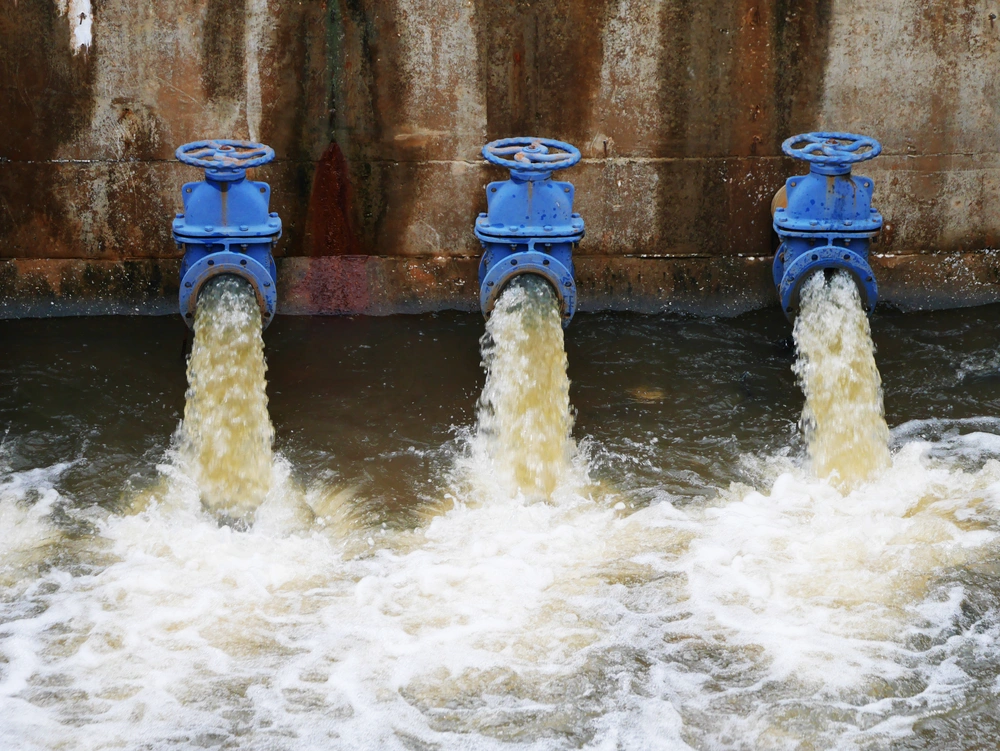
Everything you need to know about wastewater discharge standards and regulations
Against a backdrop of increasing pressure on water resources and more stringent environmental requirements, manufacturers must pay particular attention to the management of their effluents. Regulations governing the discharge of wastewater provide a strict, regularly evolving framework with which it is essential to comply.
What standards are in force? What are the risks of non-compliance? How can you adapt to these requirements without compromising productivity? Ovive explains the challenges of industrial effluent treatment!
A strict, constantly evolving framework
The discharge of industrial wastewater is governed by a number of French and European regulations. In France, Article R.214-1 of the Environment Code requires prior authorization or declaration for any discharge likely to affect the quality of surface or ground water. Companies must therefore comply with precise discharge standards, depending on the nature of their activities and the network to which they are discharged (public or natural environment).
The European Water Directive (Water Framework Directive, 2000/60/EC) imposes an integrated approach to water management, based on river basins. The aim is to achieve good ecological status for water, which means that industrial companies are assuming greater responsibility for the composition of their effluents.
Since the publication of the March 10, 2020 decree on the reuse of treated wastewater, companies have been able to consider the reuse of their treated wastewater for certain uses: equipment washing, boiler feed, irrigation of green spaces, etc. This development is prompting companies to rethink their practices and modernize their treatment facilities.
The DREAL (Directions Régionales de l’Environnement, de l’Aménagement et du Logement) are in charge of monitoring plant compliance. They can carry out one-off or planned audits, and impose compliance measures. In the event of non-compliance, penalties can be severe: fines, suspension of activity, prosecution…
The parameters monitored in discharges are numerous: phosphorus, heavy metals, suspended solids, nitrogen, hydrocarbons, etc. Limit values vary according to the sector of activity, the volume discharged and local requirements.
Adapting facilities and anticipating change
To guarantee compliance with industrial effluent discharge standards, a tailor-made approach is essential. Effluent treatment requirements vary according to the volume and nature of the pollutants to be treated, as well as the sector of activity.
The solutions are therefore varied: physico-chemical technologies, such as decantation or neutralization, biological technologies with activated sludge or biofilters, or membrane technologies (nanofiltration, reverse osmosis, etc.). The choice of process must take into account not only technical efficiency, but also operating costs, reliability and durability.
As part of the compliance process, a technical audit is recommended toidentify the shortcomings of existing installations, define priority actions and propose a suitable treatment strategy.
Some companies also choose to reduce their effluent volumes, by modifying their production processes or opting for more water-efficient technologies. The reuse of treated water in a closed circuit.
Why choose Ovive to ensure regulatory compliance?
Faced with the growing complexity of legal obligations in terms of wastewater discharge, Ovive supports manufacturers in all sectors, throughout France, in bringing their facilities into compliance, by proposing adapted, innovative and sustainable solutions.
Our teams design, install and optimize industrial effluent treatment systems tailored to the needs of each company. We also support our customers in carrying out technical audits, and offer a turnkey solution for industrial water management thanks to our Water As a Service service.
With over 25 years’ expertise in industrial water treatment and a continuous improvement approach serving the environmental and economic performance of our customers, we guarantee the regulatory compliance of your installations.