Focus on the various industrial water filtration processes
Industrial water treatment relies on filtration processes adapted to the nature of the effluent, the quality objectives and the intended uses. These operations are essential to guarantee the performance, compliance and durability of installations. Thanks to its expertise and complete mastery of filter media, Ovive supports industrial companies in all sectors in the treatment of their wastewater.
Filtration stages and media
Stage 1: Screening and sieving
The first phase of water filtration is based on pre-treatment It’ s essential to prepare the effluent properly. This phase begins with screening, whicheliminates the largest debris (waste, grease, fibers, etc.). The effluent then passes on to the screening stage, which further refines the removal of the coarsest debris.
The screening and sieving stage is essential not only to eliminate the largest waste, but also to protect the equipment in wastewater treatment plants and avoid clogging the pipes.
Step 2: Sand and zeolite filtration
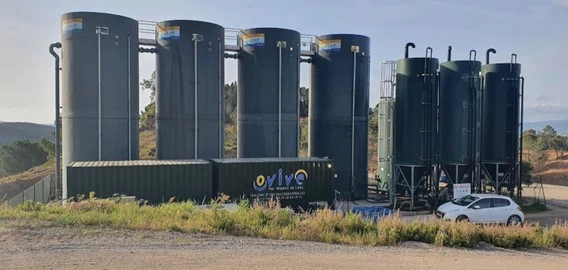
The industrial sand filters and zeolite filters are among the most widely used filtration media for trapping fine particles, sludge and organic matter in effluent. They operate by mechanical filtration: effluent passes through sand or zeolite, which absorb suspended particles and dissolved substances.
Step 3: Activated carbon filtration
Activated carbon is a media renowned for its absorption properties: it retains organic micropollutants, hydrocarbons, pesticides, solvent residues, etc. Water treatment with activated carbon is a particularly effective method for industrial water, as it improves discharge quality and favors reuse of wastewater.
Step 4: Membrane filtration
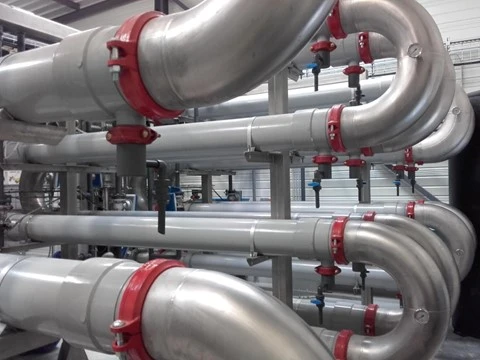
The membrane filtration combines several technologies: microfiltration, ultrafiltration, nanofiltration, reverse osmosis… It separates elements according to their molecular size, thus eliminating bacteria, viruses, dissolved salts and complex organic matter. These systems are essential when it comes to recycling wastewater or meeting the most stringent quality requirements in industry.
Step 5: Membrane bioreactor (MBR) filtration
The membrane bioreactor is a hybrid technology combining a biological phase (activated sludge) with a filtration membrane. This solution enables organic and nitrogenous pollutants to be degraded (up to 95%), while ensuring their physical separation.
This method is particularly well suited to the treatment of complex industrial effluents with very high organic loads, or to wastewater treatment projects for reuse.
Why trust Ovive to filter your industrial water?
For over 30 years, Ovive has been helping manufacturers in all sectors throughout France to filter their water. Thanks to our comprehensive expertise and rigorous selection of filtration media, we are able to design tailor-made solutions for every need.
When you call on Ovive, you can be sure ofhigh-performance, compliant and sustainablewater treatment, with a single point of contact capable of meeting all your industrial needs, from filtration to recovery and reuse.